
The Stress Bucket – Why Emptying It Changes Everything
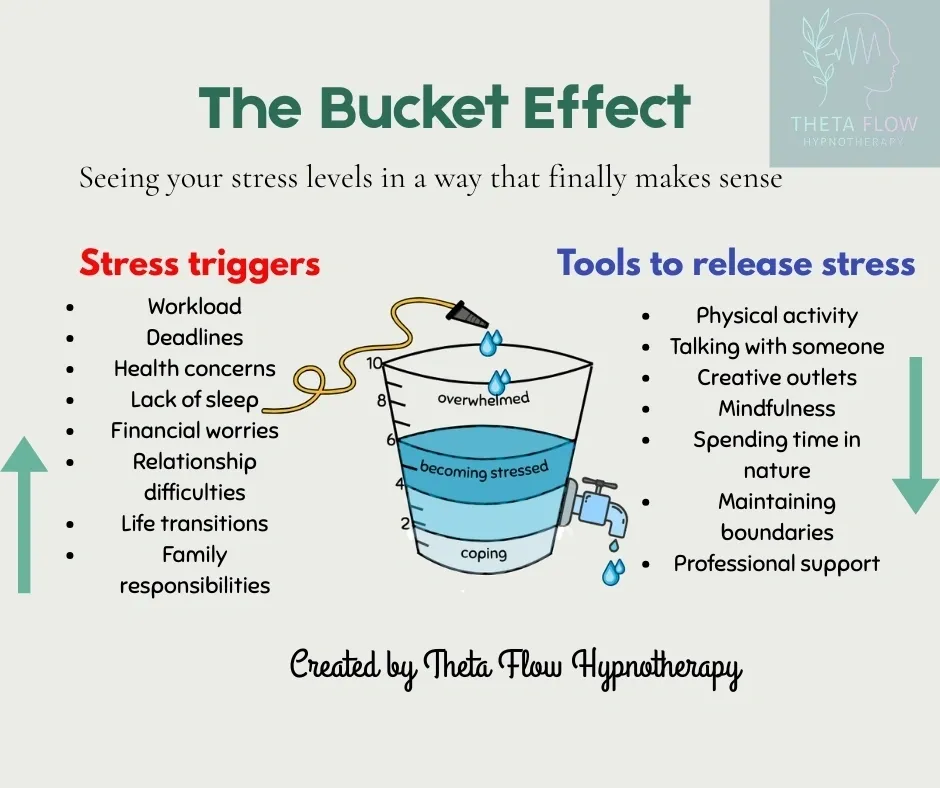
Imagine everyone carries an invisible bucket.
Everyday stressors drip into it:
- work pressure
- family demands
- health worries
- financial concerns
- past experiences
- negative forecasting
- sensory overload
When the bucket fills, symptoms appear:
- irritability
- anxiety
- overwhelm
- poor sleep
- low motivation
- difficulty concentrating
Why Some People Overflow Faster
Because the primitive brain doesn’t distinguish between:
- a real threat
- a perceived threat
- a remembered threat
- a predicted threat
It reacts to all of them as if they’re happening now.
How We Empty the Bucket
The brain has a natural emptying mechanism: REM sleep.
During REM:
- the brain processes emotional experiences
- stress chemicals reduce
- memories are reorganised
- emotional charge is removed
But when stress is high, REM becomes overloaded and the bucket stays full.
How SFH Helps
Trance mimics the REM state.
This allows the brain to:
- process stress
- reduce emotional arousal
- restore balance
- create space for rational thinking
Clients often describe feeling “lighter” after sessions. This is the bucket emptying.
Practical Ways Clients Can Reduce Bucket Load
- positive action
- positive interaction
- positive thoughts
- movement
- laughter
- connection
- small achievable goals
A Simple Takeaway for Clients
“When your bucket is full, everything feels harder. Emptying it isn’t indulgent, it’s essential for your wellbeing.”